

Dates Health Benefits
Dates grow warm-climate, sun-heavy, and it shows in how sweet they end up compared to most other fruit. That sweetness comes from natural sugars, mostly glucose and fructose, packed into a small, dense fruit rather than diluted with the water content you’d find in something like an orange. If you’re comparing snack options, it’s worth understanding exactly what’s in a date before reaching for one, so read on and see how it stacks up.
Fibre content
A 100g serving carries roughly 6-8g of fibre, most of it in the skin and flesh together, not concentrated in one part. That’s a meaningful chunk toward a daily target and part of why dates sit heavier than their calorie count suggests, chewing through the fibre slows down how fast the sugar hits.
Potassium and mineral content
Dates carry a solid amount of potassium for their size, alongside magnesium, iron and small amounts of B vitamins. None of that makes a date a substitute for a varied diet, but it’s a reasonable amount for a fruit that also happens to travel and store well, unlike most fresh produce.
Energy density
Gram for gram, dates carry more calories than most fresh fruit because so much of the water has already left the fruit during ripening and drying. That density is exactly why they work as a portable snack: a small handful covers what a much larger amount of fresh fruit would, useful when you need something compact that keeps for weeks without refrigeration.
How they compare to a processed sweet
Swap a handful of dates for a chocolate bar and you keep the fibre, the potassium and the minerals that come packaged with the sugar, instead of sugar with almost nothing else attached. That’s the honest case for dates as a snack: not that they’re a cure for anything, just a better-built sweet thing to eat.
Buying and storing
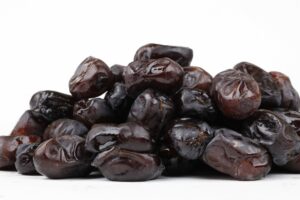
Fresher, softer dates like Mazafati need refrigeration and are best eaten within a few weeks; drier varieties keep for months in a sealed container at room temperature. Either way, check for a moist but not sticky-wet texture and avoid anything with a sugary crust on the outside, a sign it’s been stored too long or too warm. For the full range and grading, see our listing if you want to maintain your health through better snack choices rather than a supplement aisle.